My Granddaughter Stole My Coins and Saved Me
Part 4 - The Price of a Dollar
St. Brendan's was a shelter with a good kitchen and a bad smell. I had been there two years. The director, a woman named Carla, knew my story. She did not pity me. She put me to work.
"You can chop," she said. "You can't sit."
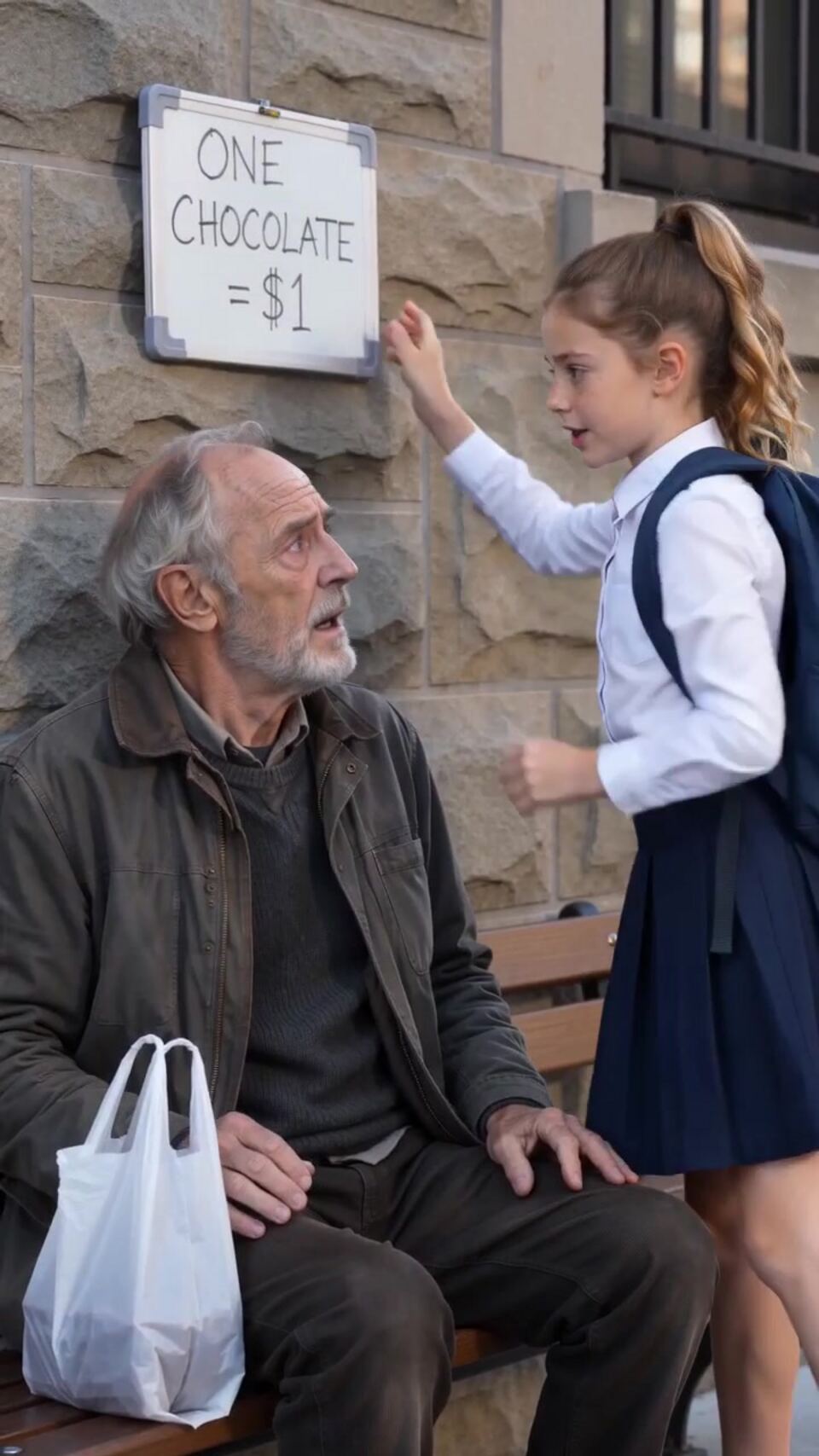
I chopped. I peeled. I washed pots. I made soup. I said little. At night I lay in my bunk and thought about the sign. ONE CHOCOLATE = $1. I thought about Lily's careful letters. I thought about Nora's face when she said, "She thinks you're dead."
I did not go back to the wall.
A week later, Ruth came to the shelter. She brought me a new coat from a thrift store. She sat across from me in the dining hall and watched me eat.
"Nora called me," she said.
I set down my spoon. "Is Lily all right?"
"She's fine. Nora is not fine. She read your letter."
"What did she say?"
"She said you sounded like yourself. Then she cried for an hour. Then she said she needed time."
"Time isn't a promise."
"No. But it's not a no."
I nodded. I finished my soup. Ruth watched me.
"You're not going to ask me to fix it?" she said.
"No."
"Good. I can't. I won't."
"I know."
She reached across the table and squeezed my hand. "You look better."
"I have a job."
"Chopping onions?"
"It's honest."
She smiled. "It is."
Two weeks later, Carla called me into her office. A woman from the school had phoned. The seventh-grade class was coming to volunteer at the shelter. They needed help with the lunch line. Carla wanted me to stay in the kitchen.
"Why?" I asked.
"Because one of the students is named Lily. The teacher mentioned it. I thought you should know."
My heart kicked. "I'll stay in the back."
"Good."
The day came. I stayed in the kitchen. I chopped carrots. I heard the children in the dining hall. I heard their voices, high and bright. I heard Lily laugh. I knew her laugh. I had only heard it once, but I knew it.
Then the kitchen door opened. Lily stood there with a tray of empty cups. She wore the navy dress and white shirt.
She stopped. "You're the chocolate man."
I put down the knife. "Hello."
"You're not at the wall anymore."
"No."
"Why?"
I looked at the door. Nora was not there. A teacher was. I did not want to lie to the child. I did not want to tell her the truth either.
"I found a job," I said.
"You sell chocolate?"
"No. I chop vegetables."
She considered this. "That's good."
"It is."
"My mom said you were someone she used to know."
I felt the floor shift under me. "Did she?"
"She said I shouldn't talk to you."
"Then you shouldn't."
Lily looked at me. "Are you sad?"
"Sometimes."
"Why?"
"Because I made mistakes."
She nodded, as if this made sense. "Everybody makes mistakes."
The kitchen door opened again. Nora stood there. Her face was white. She looked from me to Lily. "Lily. Come here."
Lily looked at me. "Bye, chocolate man."
"Goodbye."
She went to her mother. Nora did not look at me. She took Lily's hand and walked away. I heard her speaking low and fast outside the door. I heard Lily ask, "Why are you mad?"
I picked up the knife. My hands were shaking. Carla came in and took it from me.
"Take a break," she said.
I went to the back steps. I sat down. The cold air felt good. I thought about leaving the city. I thought about disappearing again. It would be easier. It would be what Nora expected. It would keep Lily safe from confusion.
But I was tired of disappearing.
The next day, Nora came to the shelter. She stood in the dining hall with her arms crossed. Carla let her in. Nora looked at me. Her eyes were red.
"She knows," Nora said.
"What does she know?"
"She knows you're not dead. She figured it out. She asked why the chocolate man looked sad when she said her mother knew you. She asked if you were my father. I couldn't lie. I tried, and I couldn't."
I sat down on a bench. Nora sat across from me. She did not sit close.
"She's not scared of you," Nora said. "That's the worst part. She thinks you're a sad old man who needs a sign."
"She's not wrong."
Nora laughed, then covered her mouth. It was a broken sound. "I don't know how to do this. I don't know how to let you in without hating myself."
"You don't have to let me in. You can tell me to leave again."
"I did. You didn't."
"I'm leaving the school alone. I'm not at the wall. I'm here, working. That's all."
Nora looked around the shelter. She looked at the clean tables, the stacked chairs, the pot of soup. She looked at me.
"One dinner," she said. "Sunday. At our place. You bring nothing but yourself."
I nodded. "All right."
"And you don't call her your granddaughter. Not until I say."
"All right."
"And if you drink, I will never let you see her again."
"I won't drink."
"You say that now."
"I have said it for five years. I mean it."
She stood up. She pulled her coat tight. "Sunday. Six o'clock. Don't be late."