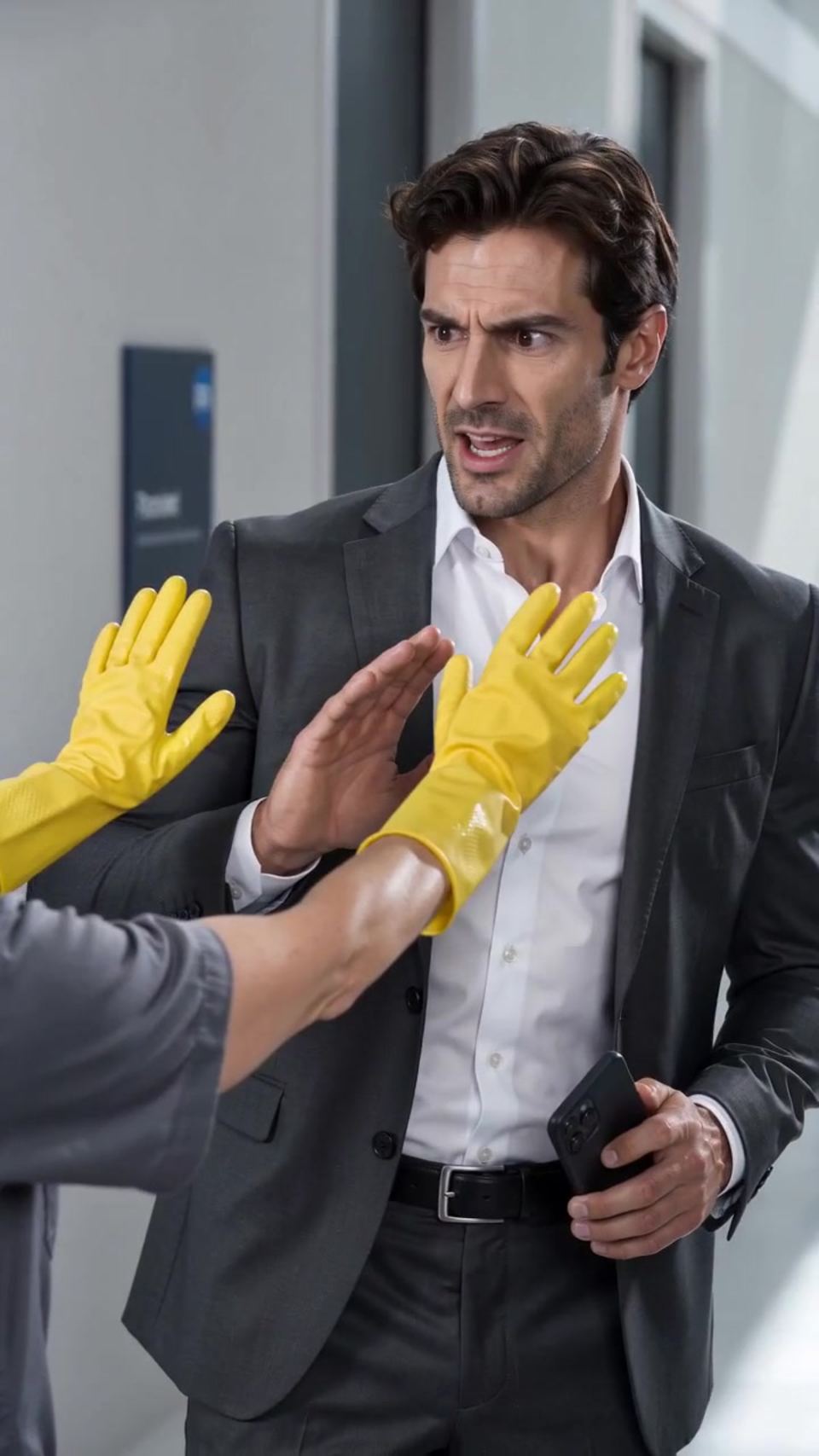
My Comatose Wife Woke Hearing Her Last Recording
Part 2 - What Ruth Had Kept
I put the player inside my jacket.
“Why?” I asked.
He looked past me at Ruth.
“Unapproved equipment can interfere with care.”
The night nurse, whose badge read MARA, stepped between him and the bed.
“The medical team is assessing a change in responsiveness. Please wait outside.”
For the first time in six months, someone in a uniform told him no.
Clara did not suddenly become well. Her speech faded. She tired within minutes. The clinicians could not tell us what part familiar sound had played, if any, in the change they were seeing. They continued examining her while I sat in the corridor with a red plastic machine pressed against my ribs.
Ruth sat beside me.
“Tell me everything,” I said.
She had found Clara crying in a supply alcove two days before the fall. Clara had discovered that patients were being billed for days after their deaths or transfers. At first she thought it was a software error.
Then a bereaved husband came to the billing desk with a charge for treatment his wife had never received.
Clara had promised to investigate.
“She told me somebody was changing her corrections back,” Ruth said. “She didn't know who she could trust.”
“Why give it to you?”
“Because people talk as though a cleaner isn't there.”
The words shamed me. I had spent months asking Ruth for fresh tissues without once wondering what she knew.
We listened to the rest through a pair of old headphones.
There were no dramatic confessions. Only Clara dictating invoice numbers, dates, and the location of supporting records. She had used the cassette because the hospital tracked downloads from her work computer.
At the end she said, “Ruth has the original letter. The duplicate is where Mum keeps losing her place.”
I knew immediately.
Clara's mother had left her a paperback cookbook, its binding loose, its pages crowded with notes. Clara kept it beside our kettle. Her mother had used an envelope as a bookmark for years.
I called my sister and asked her to fetch it without telling anyone why.
Then I called the police.
By dawn, an officer had taken our statements. He asked for the original recording, documented its condition, and arranged to preserve it. He did not promise an arrest. He asked careful, frustrating questions.
Had Clara ever named a person?
Had Ruth witnessed the fall?
Could the signature have come from an older document?
“No,” I said. “No. Yes, maybe.”
Truth was slower than fear.
At seven, my sister arrived with the cookbook.
Inside was a sealed envelope addressed to an outside compliance investigator. Clara had written the contact information herself. The letter described the billing alterations and mentioned a meeting with hospital administrator Martin Vale.
The date was the morning of her fall.
Under the letter was a photocopy of a transfer authorization.
It was the same form Vale had shown me the night before.
But Clara had signed it two years earlier, after a minor operation.
Someone had changed everything except her name.